
Uncategorized
Insurance for cars in our care
Due to the limitations of Insurers in their willingness to pay out, we have to point out that cars on our premises and in our care are covered only to the level of what insurers call ‘Market Value’. This is a vague term open to different interpretations but is usually significantly less than what the owner feels their car is worth. Please read our short article here.
Insurance
We would be very interested to hear - and share - your views, good or bad, about classic car insurers. Our clients want to be able to insure their restored cars for what it cost them and this baffles many insurers who go running for the ‘book’ and try to fob us off with ‘book’ value for insurance. Some insurers are more enlightened and we’d be grateful to hear your experiences. Please put any comments in the box below, and we will select the most useful answers and share them here. Thanks in anticipation.
Jaguar creates unique ‘Greatest Hits’ XJ6 for Iron Maiden drummer Nicko McBrains
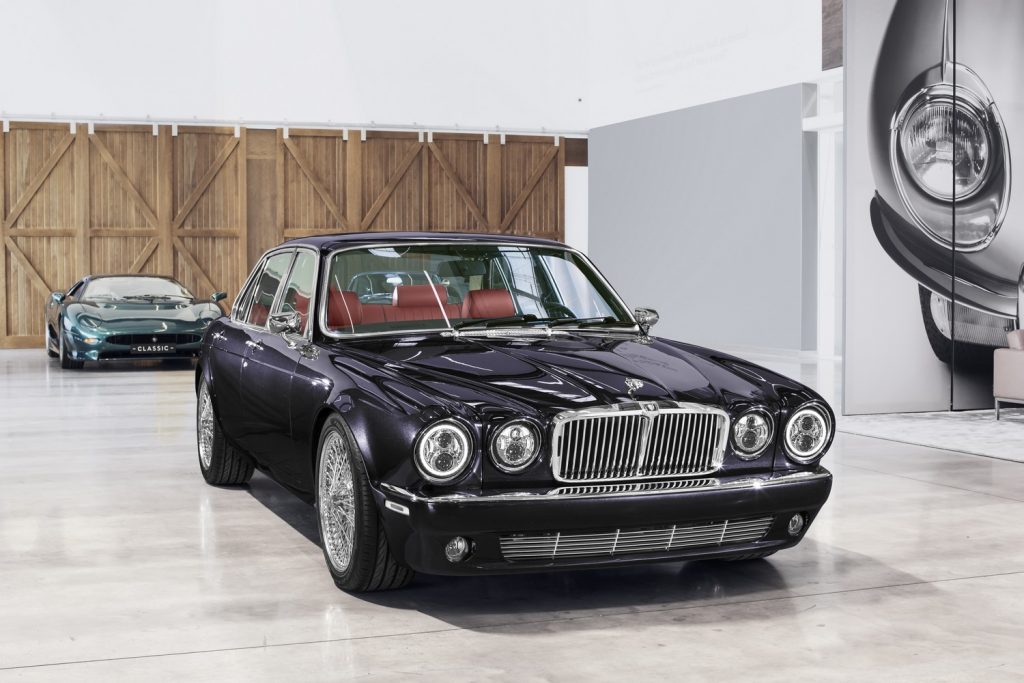
- Jaguar’s 50 years of XJ celebrations begin with bespoke Jaguar Classic commission for Iron Maiden drummer and life-long Jaguar enthusiast ‘Nicko’
- Nicko’s classic 1984 XJ6 Series 3 features a host of custom touches inspired by all five decades of Jaguar XJ production, and McBrain’s heavy metal heritage
- ‘Greatest Hits’ XJ is a collaboration between Nicko, the expert engineers and craftsmen at Jaguar Land Rover Classic Works and Jaguar Design studio director Wayne Burgess
- Bespoke XJ unveiled at Geneva International Motor Show on 6 March during the Jaguar Land Rover press conference
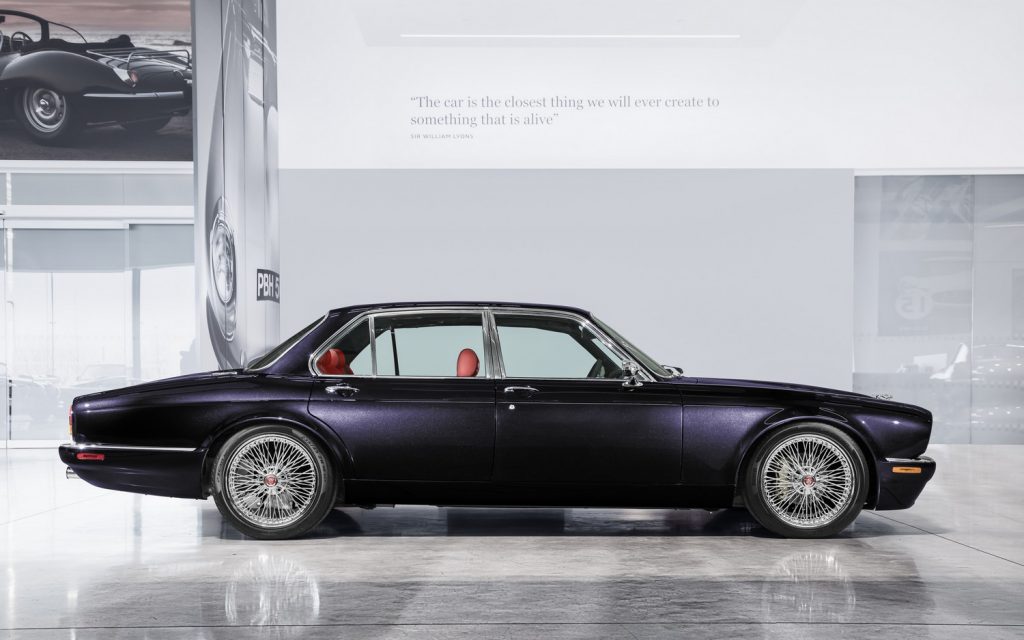
Today at the Geneva Motor Show Jaguar Classic is proud to present Iron Maiden drummer Nicko McBrain’s custom-built ‘Greatest Hits’ Jaguar XJ6, kicking-off Jaguar’s XJ 50th anniversary celebrations in 2018.
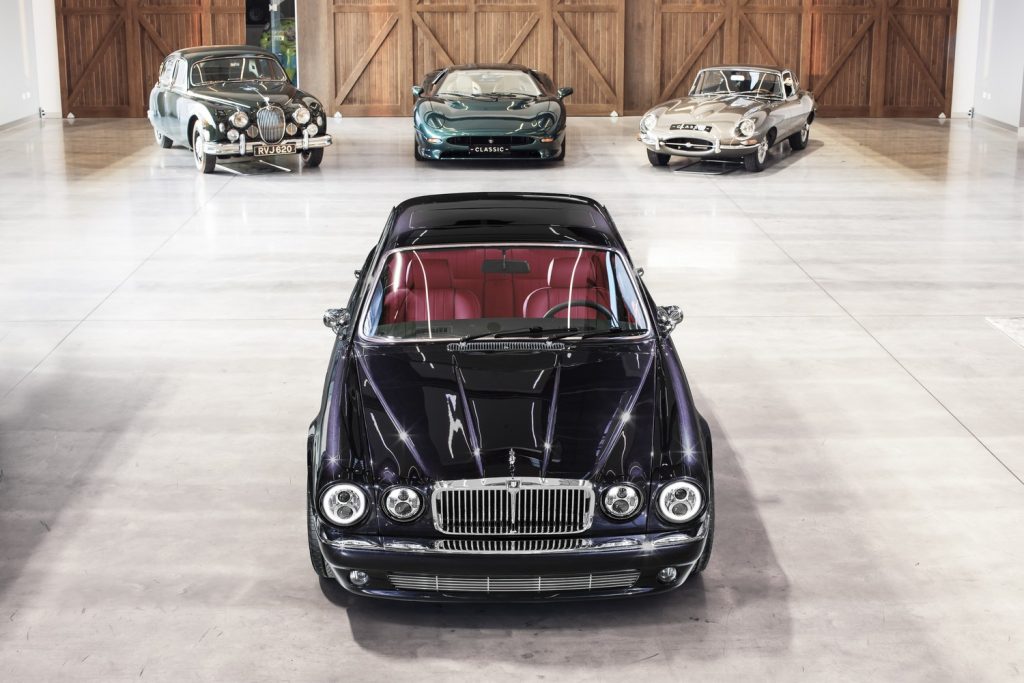
The bespoke commission is a collaboration between Nicko, the expert engineers and craftsmen at Jaguar Land Rover Classic Works in Coventry, and Jaguar Design studio director Wayne Burgess. The project involved more than 3500 man hours of work, with more than 4000 parts refinished, replaced or redesigned. Unlike any 1984 XJ6 before, it incorporates substantial modifications to the exterior, interior, drivetrain and suspension, resulting in Nicko’s dream XJ.
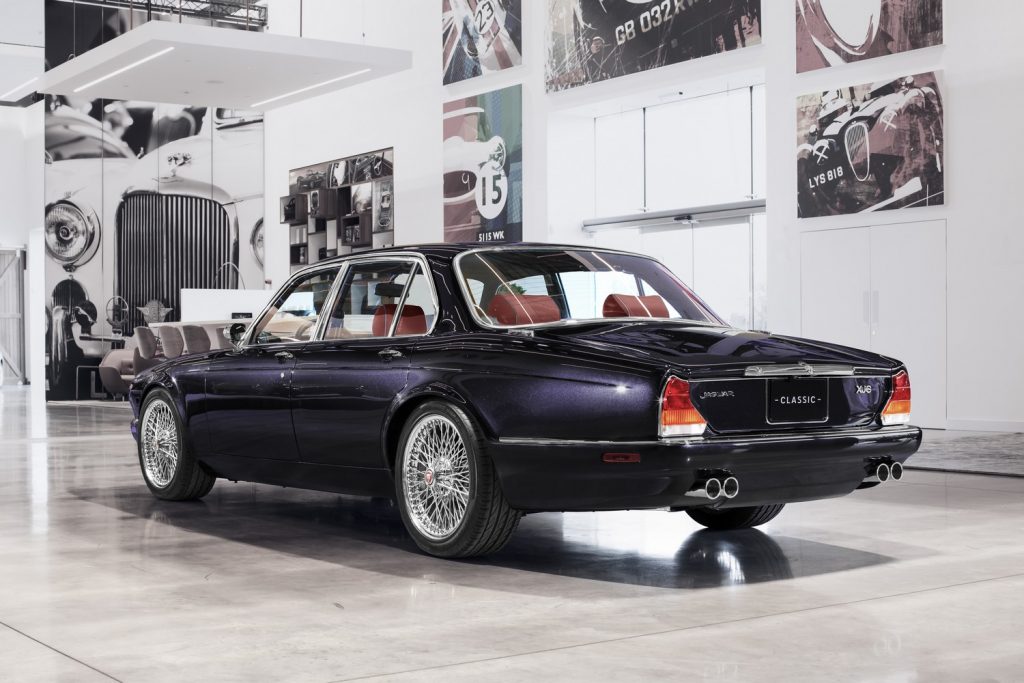
“This is my ultimate XJ – my third, and lovingly named ‘Johnny 3’. It has been a true labour of love between Jaguar Classic and myself. I’m so excited by its completion and especially to be showing it at Geneva – it really is a Greatest Hits edition and to me it defines what the Jaguar XJ is all about. It’s a credit to the craftsmanship of the Jaguar Classic team. We couldn’t have timed it better, this being the 50th anniversary of XJ – my favourite of all Jaguars.”
NICKO MCBRAIN
IRON MAIDEN DRUMMER
Key features include:
- Unique front and rear bumpers – seamlessly blended in to the modified fenders with bespoke chrome brightwork and flush-fit US side markers
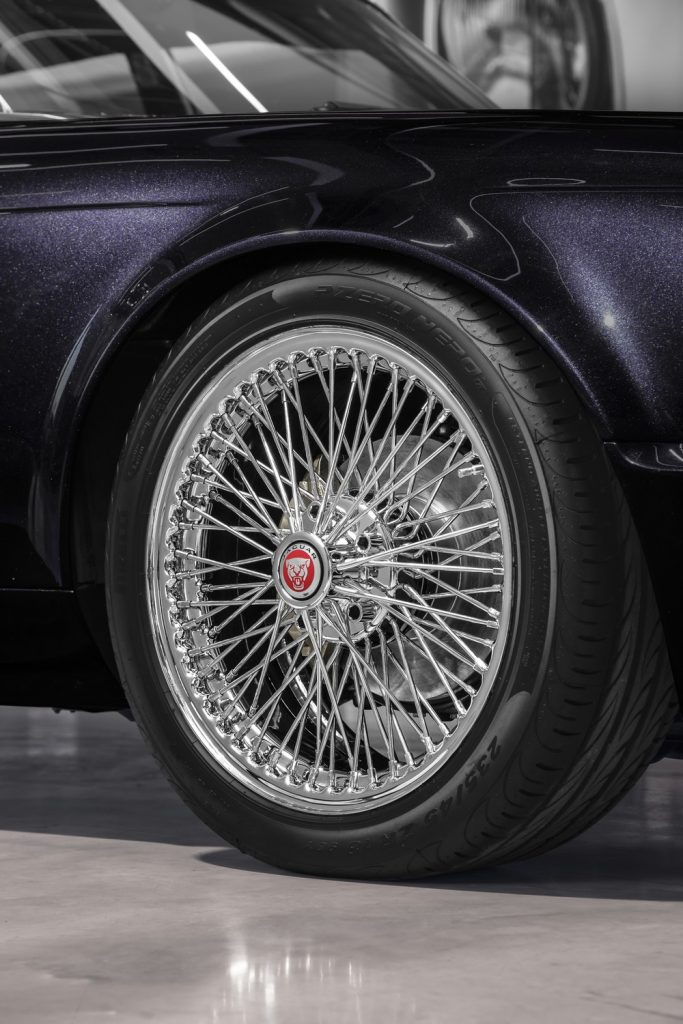
- Flared and re-profiled front and rear wheel arches accommodating bespoke 18-inch wire wheels fitted with 235/45 R18 Pirelli P Zero tyres
- Unique sills and modified rear door pressings
- Uprated front and rear suspension with adjustable rear dampers
- Unique Mauve paint finish
- Conversion to elegant Series 2 XJ door handles and bullet wing mirrors
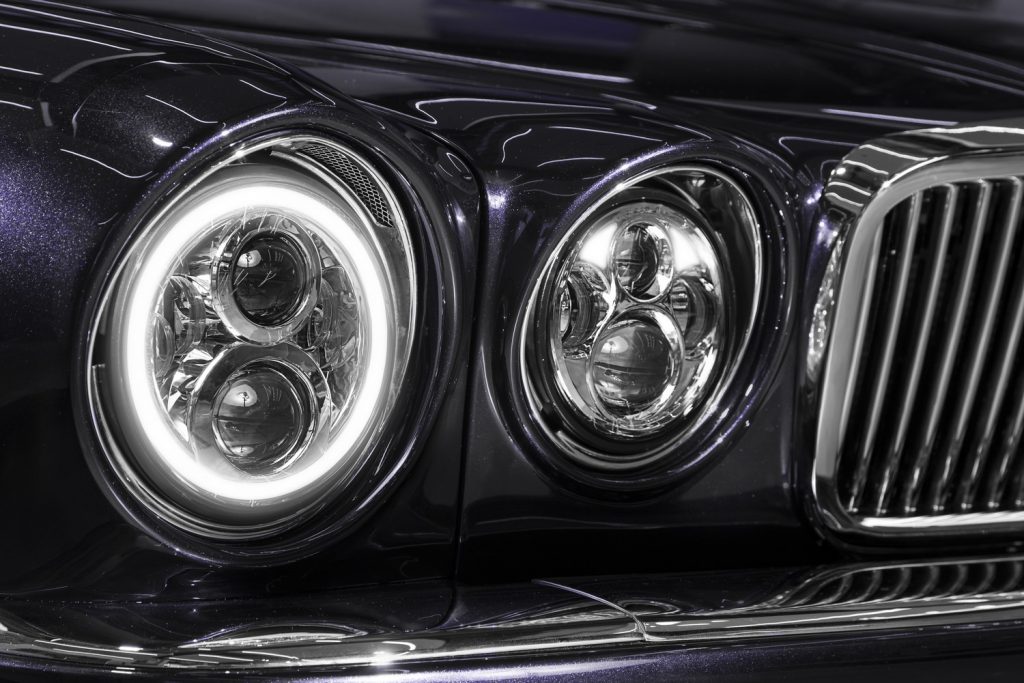
- Conversion to LED headlights with ‘Halo’ daytime running light signature
- Conversion to recessed twin fuel fillers
- Modern door sealing for reduced wind noise, and additional sound deadening
- Integrated touch screen operating satnav, phone, rear view camera and in-car entertainment
- Re-trimmed interior with modified seat foams improving refinement
- Bespoke audio system with USB connectivity, featuring guitar amplifier-inspired control knobs machined from aluminium
- In-dash starter button
- Uprated air-conditioning
- Remote central locking
“Creating this ‘Greatest Hits’ XJ, and the whole process of bringing someone’s automotive dream to life, has been extraordinarily rewarding for the Jaguar Classic team. It’s been a pleasure to work with Nicko and we’re looking forward to hearing the reaction to this project.”
TIM HANNIG
JAGUAR LAND ROVER CLASSIC DIRECTOR
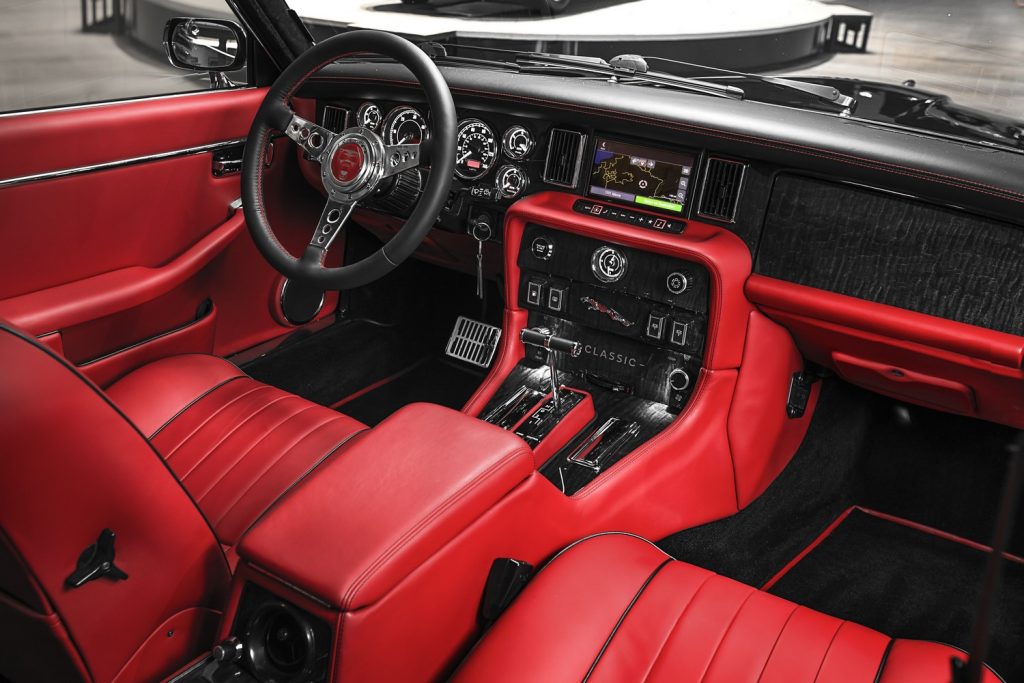
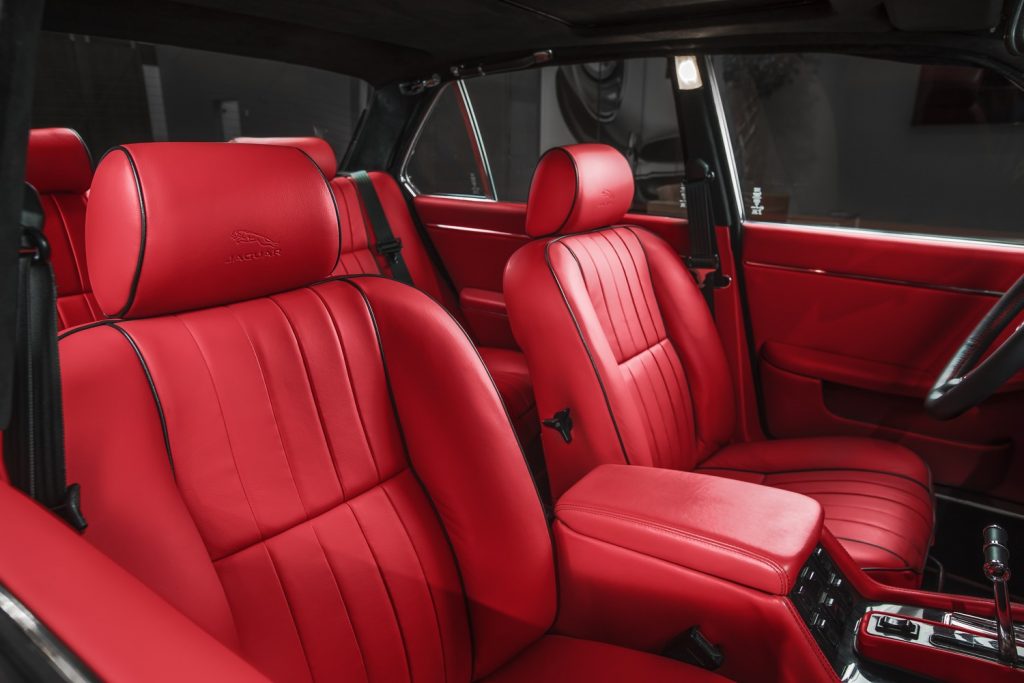
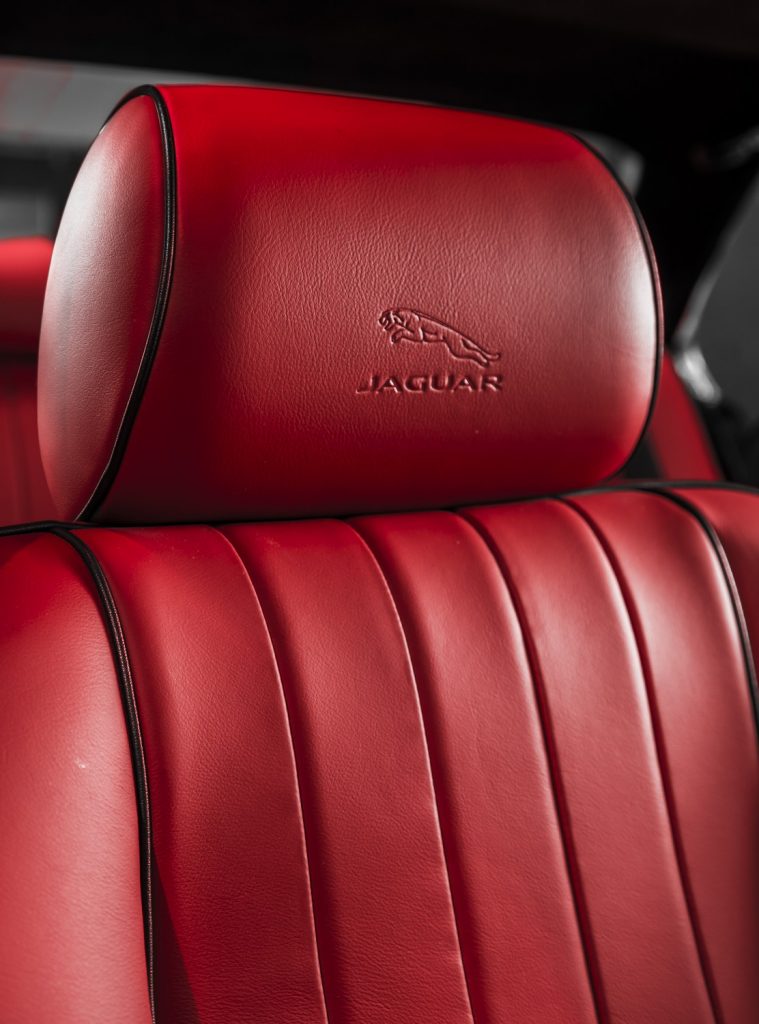
Inside, classic Jaguar style meets modern day convenience. The leather seats are hand trimmed in Pimento Red with black piping and embossed head rests, while a black hand-crafted carpet and Alcantara headlining finishes off the trim. The dashboard features Dark Grey stained Sycamore veneers – the preferred material for Nicko’s favourite snare drums.
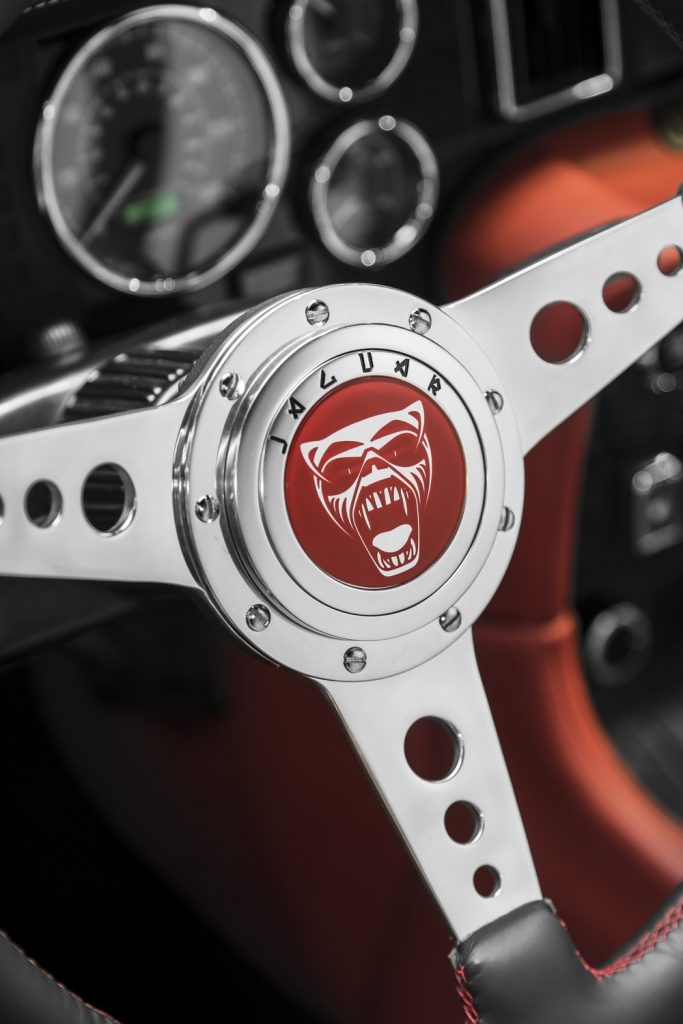
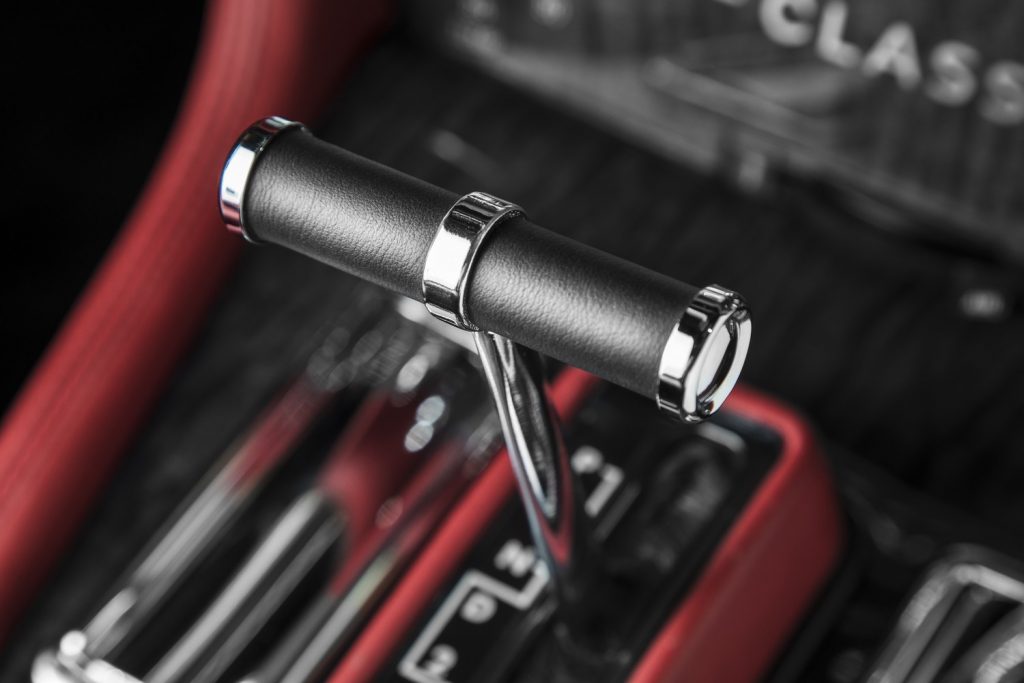
Further nods to the owner’s art include machined aluminium rotary controls on the dashboard – inspired by the control knobs of the guitar amplifiers created by Nicko’s great friend Jim Marshall, and drum kit inspired pedals finished in chrome and black. The custom three-spoke sports steering wheel features Nicko’s unique mascot – the ‘Eddie Growler’, first seen on his specially commissioned 2013 Jaguar XKR-S.
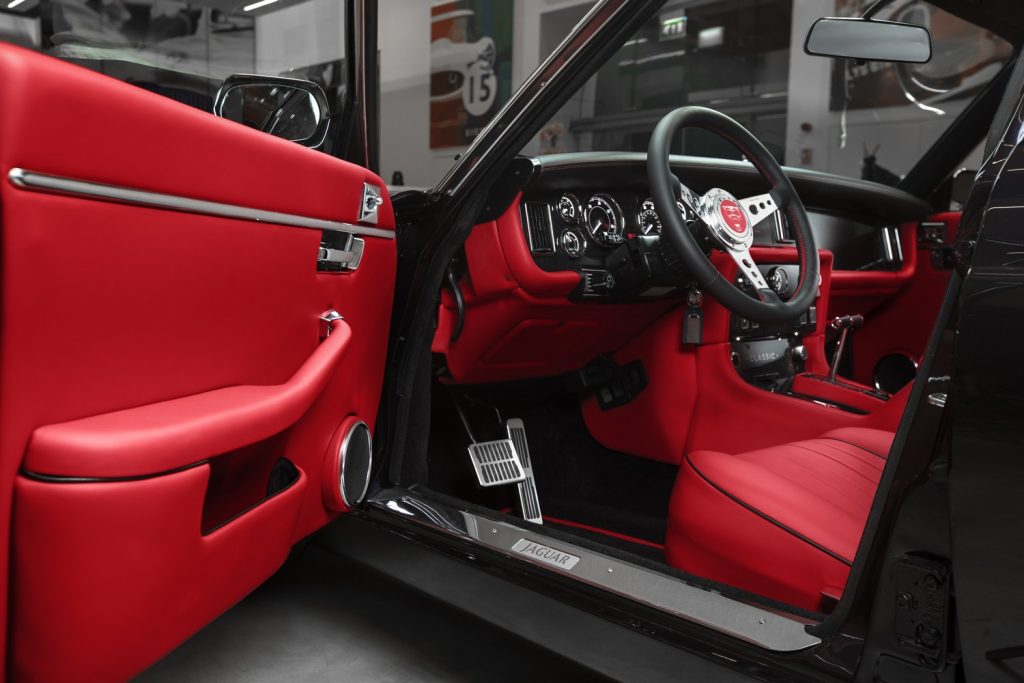
Bespoke soft down lighting illuminates the revised dashboard, in which a state-of-the-art Alpine touch screen controls the 1100W sound system, powering speakers from Nicko’s preferred Jaguar audio installation, the 12MY Jaguar XF.
Incorporating a number of reconditioned parts from McBrain’s original XJ6, the 4.2-litre in-line six-cylinder engine features three 2-inch SU carburettors from the E-type – Nicko’s favourite set up. Machined quad-exhaust tail pipes finish-off a specially-designed exhaust system.
Preserved components from Nicko’s first XJ6, which spent many years stood in the grounds of the home of Iron Maiden bass guitarist Steve Harris, following Nicko’s move to America, are present elsewhere in the build too: from the iconic Jaguar leaper bonnet mascot, which first attracted Nicko to buy the car, to the original ignition keys from 1984.
Jaguar XJ-SC: A cabriolet fit for a princess
A notable Jaguar XJ-S V12 Cabriolet with royal connections will be one of a record number of stunning retro cars from the halcyon heydays of motoring appearing at this weekend’s London Classic Car Show at Excel London (15-18 February).
While many of the 700+ wonderful automotive icons on display will have their own incredible histories, few if any will have better stories to tell than this totally one-off 150mph Jaguar – a sportscar which was fashioned especially for Diana, Princess of Wales.
The model first being released in 1983, this famous 1987 XJ-SC was not only one of the most photographed cars of its era but was also totally unique, built to the Princess’ own bespoke specification.
The V12 powered regal cabriolet features 2 rear seats and an individually made, permanently fixed, rear hard top to ensure that the two Princes could not strike their heads on the solid targa roof bar in the event of an accident.
Also, unlike any other XJS, the once royal roadster is fitted with personalised leather and Harris Tweed seat trims, chosen by Princess Diana. What’s more the exterior bodywork came with the US spec quad highlights and was finished in British Racing Green to match the Aston Martin that husband Prince Charles had acquired around the same time.
The Princess was regularly seen driving this majestic model from 1987 to 1991. Her and Sarah, the Duchess of York who also owned an XJS V12, except a convertible model would often enjoy driving their Jaguars together. Sarah’s car was later restored by KWE in 2007. Then, when the two Princes outgrew their small rear seats, Diana sold it to the Jaguar Heritage Trust, an educational charity established to preserve the legacy of Jaguar for the nation, in exchange for a contribution to one of her own charitable causes.
A little history on Jaguars XJ-SC
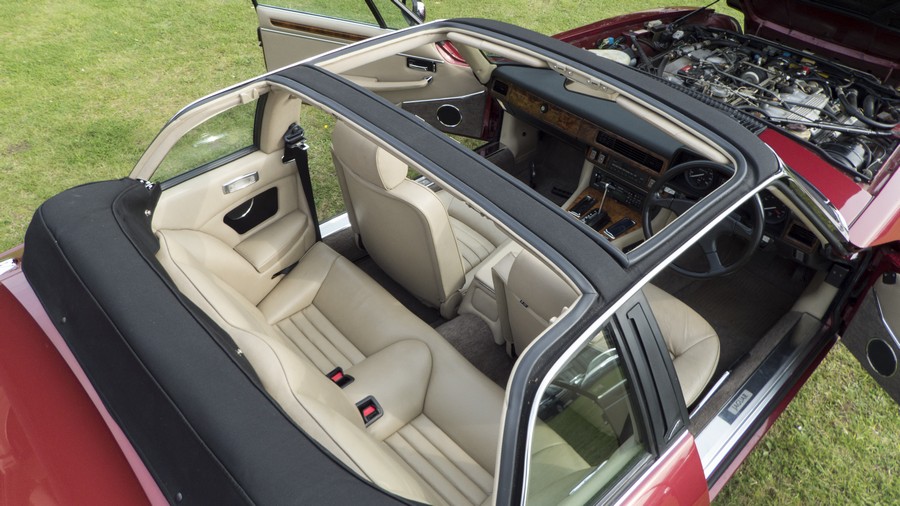
First came the coupe (1975), then the cabriolet (1983), and finally the convertible (1988). The XJS was not ready to have the top removed entirely, since omitting the roof would tend to make the XJ6-based monocoque sag in the middle. A great deal of engineering work and a lot of time was needed to produce an open car, even one with some of the roof in place. The compromise arrangement recalled the roof bracing of the late Triumph stag. The framework was kept in place but there were removable close-fitting panels, resulting in a pleasantly proportioned car from which Malcolm Sayer’s well-intentioned, but controversial “flying buttresses” were eliminated.
More significantly the XJ-S was available for the first time with a 6-cylinder engine, the AJ6 being tried out first in a low production volume model where its weaknesses would be exposed, but not to too many customers. It was a sensible move which breathed a new life into the model. The delightfully smooth and perfectly adequate 3.6 was offered on the cabriolet with the option of a 5 speed Getrag manual gearbox. Although, the 12-cylinder XJS was still a popular choice.
In 1985, Jaguar released the 5.3 V12 Cabriolet. This model had the option of rear seats, whereas the earlier model had a storage box, much like the early convertibles which were released later in 1988.
Sales of the XJ-S were on the turn. Improved reliability was the principal reason for an increase to 4,808 cars in 1983 and 6,028 in 1984. In 1985 sales received a boost with the V12 Cabriolet for which the production process was streamlined, and the HE badge was dropped in favour of a “V12”. When Jaguar released the fully convertible electric soft top, the cabriolet was discontinued after a production run of 5,013 cars.
KWE completes restoration on XJ-SC: Customers cabriolet has full treatment
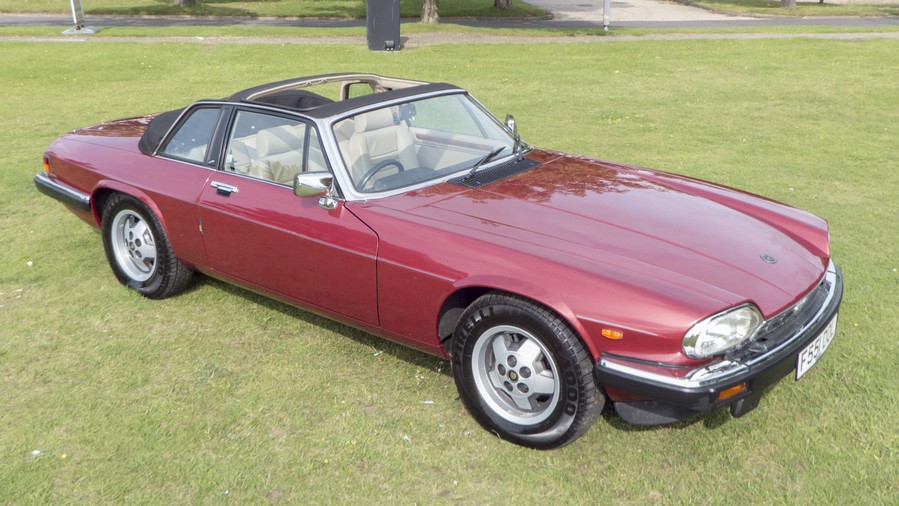
Here we have our most recent restoration, a fully restored XJ-SC finished in Solent blue with luxurious magnolia leather and burr walnut trim. Click here to view the full write up and images in our showcase.
If you would like your own XJS built to your bespoke specification, please contact us to discuss our restoration services.
We also currently have a very original 4-seater 1988 XJ-SC Cabriolet with 25000-miles for sale, click here to see the full listing and images.
Changes to our Payment Terms
As of 13th January 2018 a law has come into force requiring companies who accept credit card payments to absorb the charge that the credit companies levy on such transactions. This levy is typically between 2.5% and 3% (more for American Express). With high value transactions such as ours, this levy is very significant and can be many hundreds of pounds which previously was passed on to the customer since credit cards are a convenience for the client, not the supplier.
KWE now regrets that it can no longer as of 23rd January 2018 accept credit cards as a means of payment. We are happy to accept debit cards, cheques and internet bank transfers.
This change has been made in our Terms of Business
We apologise for the inconvenience this may cause.
KWE has been restoring Jaguars for 15 years!
Knowles-Wilkins Engineering (KWE) Ltd has reached its 15th Anniversary. From being very much new kids on the block back on 2002, we have become well known at home and abroad for our Jaguar XJS restoration and modernisation work. Owners Chris and Theresa Knowles started the company from their home and, perhaps surprisingly, took three major orders in the first two months, appeared on Top Gear twice and turned over around £100,000 before moving the business (and home) to Newbury, Berkshire in 2004. Since then we have restored over 300 cars, most with our admired full suspension/brakes/steering upgrade package.
We currently employ 10 staff and occupy three very busy premises on Greenham Business Park, and are currently recruiting. We would like to thank all of our past and present customers for their continued support and love for the Jaguar.
We have expanded our works to include XK, all XJ saloons, E Types and Aston Martin DB7s. We are continuing to develop, improve and revitalise these astounding classic and future classic cars.
KWE are now offering servicing for Jaguar X300, X308, X-Type, S-Type, XK8/R.
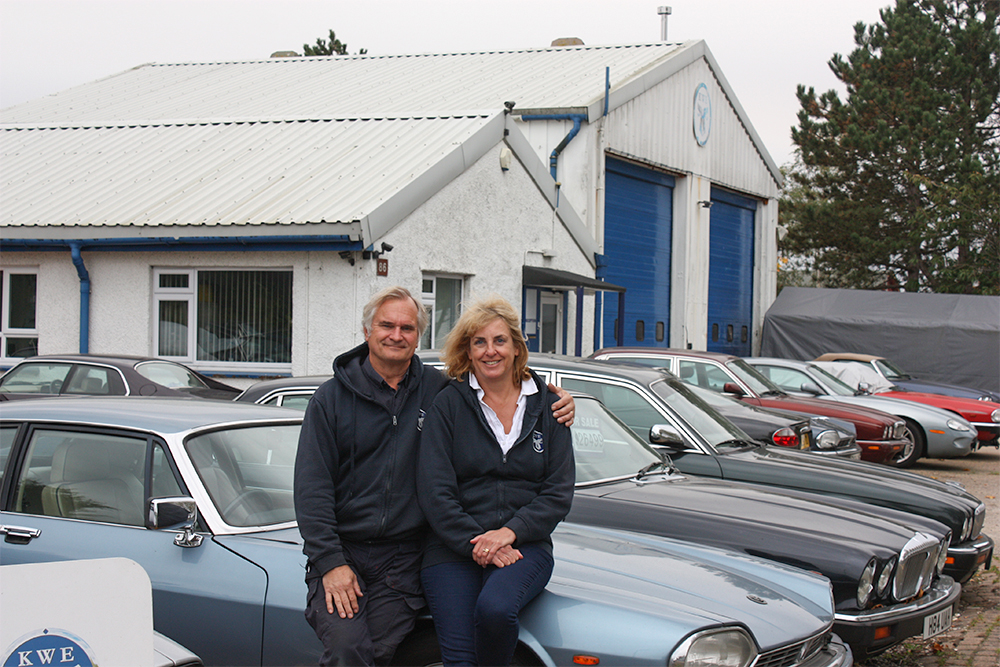
Happy owners! Chris & Theresa Knowles on KWE’s 15th Anniversary.
Fully Electric Jaguar E-Type Zero a Truly Modern Classic
Jaguar Land Rover Classic electrifies the past with an inventive Jaguar E-type sports car featuring fully electric powertrain
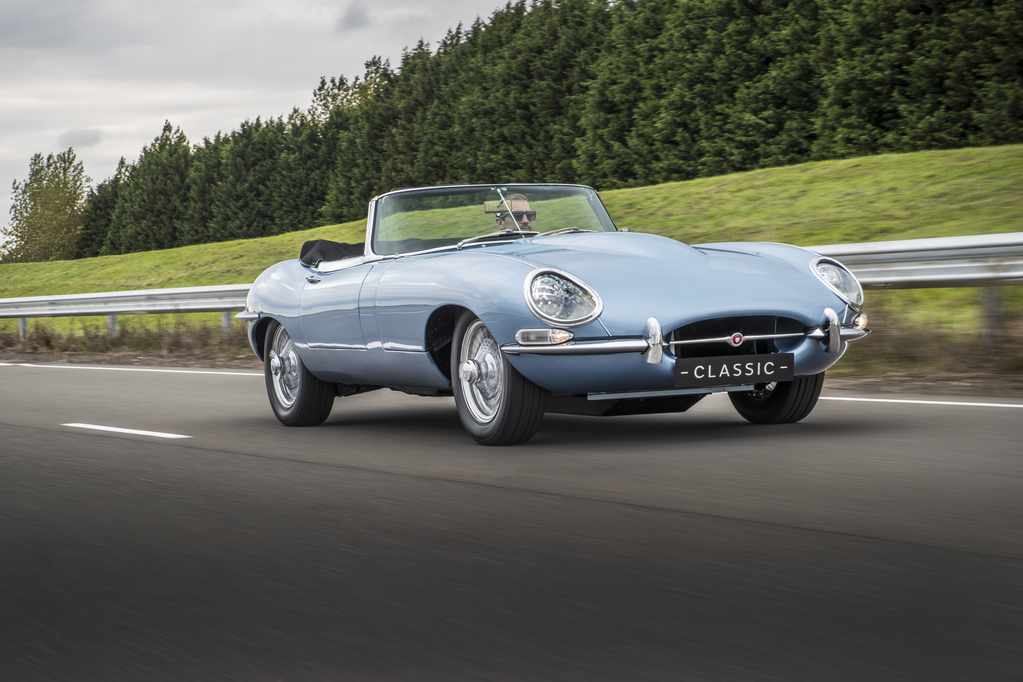
- Acclaimed by Enzo Ferrari as “the most beautiful car in the world”, the Jaguar E-type now combines breathtaking beauty with zero emissions for the first time
- E-type Zero is based on 1968 Series 1.5 Jaguar E-type Roadster, and features a cutting-edge electric powertrain enabling 0-62mph in just 5.5 seconds
- Engineered by Jaguar Land Rover Classic at company’s new ‘Classic Works’ in Warwickshire, UK
- E-type Zero makes world debut during Jaguar Land Rover Tech Fest at Central Saint Martins, University of the Arts London from 8-10 September
- E-Type Zero will sit alongside the all-electric Jaguar I-PACE at Tech Fest, which goes on sale in 2018
“E-type Zero combines the renowned E-type dynamic experience with enhanced performance through electrification. This unique combination creates a breathtaking driving sensation.
“Our aim with E-type Zero is to future-proof classic car ownership. We’re looking forward to the reaction of our clients as we investigate bringing this concept to market.”
Tim Hannig, Director, Jaguar Land Rover Classic
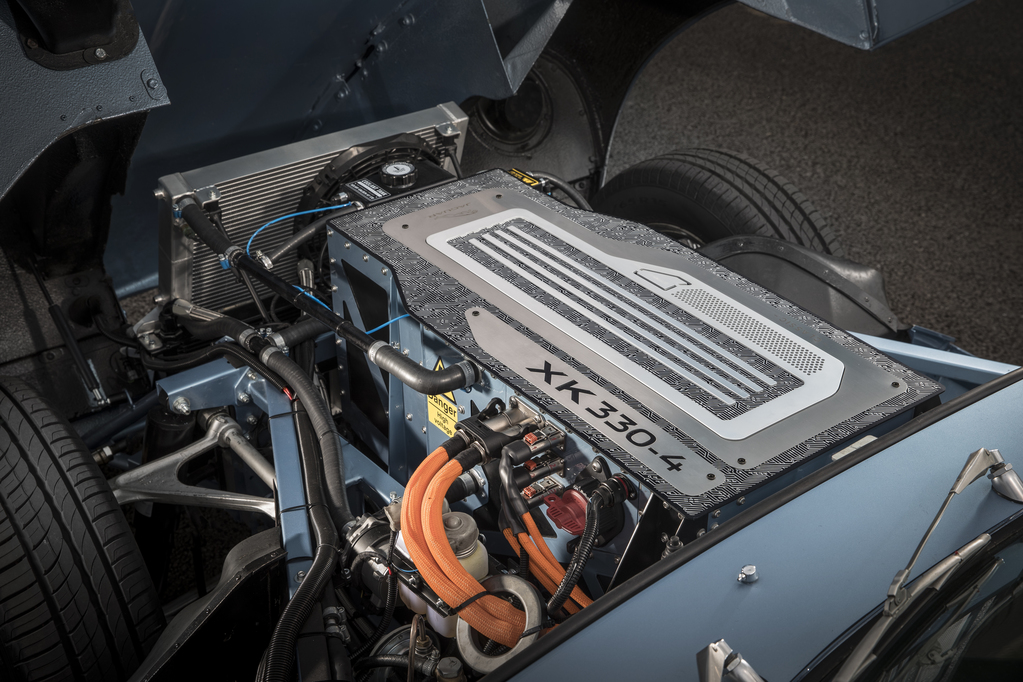
The Jaguar E-type Zero not only drives and looks like an E-type, it also offers outstanding performance. It’s quicker than an original E-type: 0-100km/h (62mph) takes only 5.5sec, about one second quicker than a Series 1 E-type.
“In order to seamlessly combine the new electric powertrain of E-type Zero with the dynamic set-up of the original E-type specification, we have limited the vehicle’s power output. We believe this provides the optimum driving experience.”
Tim Hannig, Director, Jaguar Land Rover Classic
The E-type Zero vehicle, displayed at Tech Fest, is a restored Series 1.5 Roadster. It’s totally original in specification, apart from its 21st century state-of-the-art powertrain and modified instrumentation and fascia – although these are also inspired by the original E-type. LED headlights are also used to achieve energy efficiency. Again, they adopt the styling theme of the original Series 1 E-type.
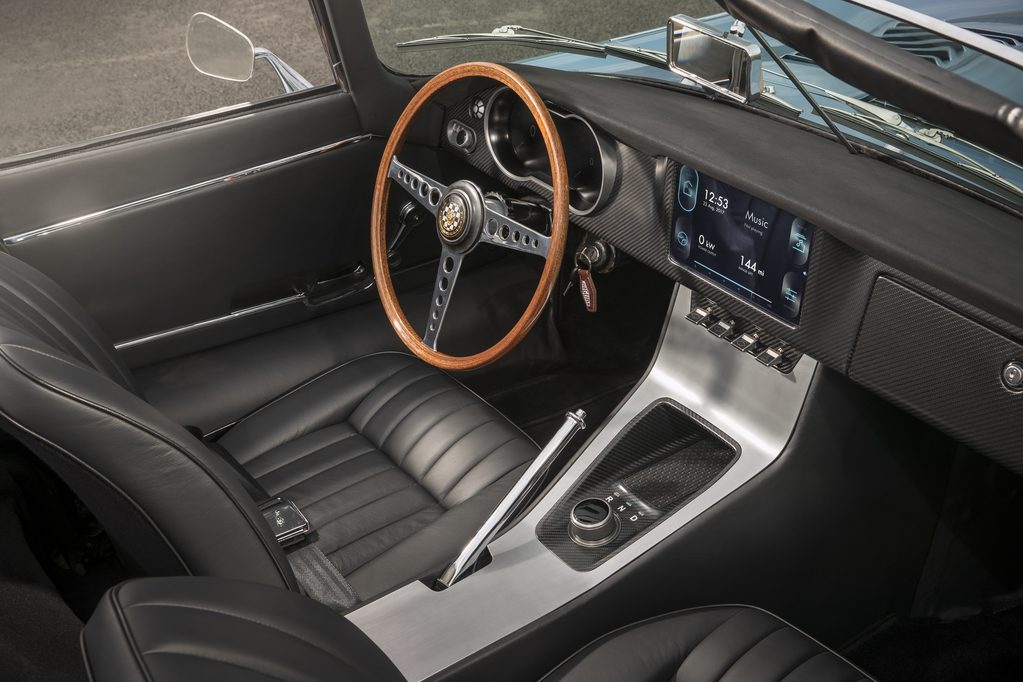
Bespoke electric powertrain
An electric powertrain developing 220kW has been specially designed for the E-type Zero. Its lithium-ion battery pack has the same dimensions, and similar weight, to the XK six-cylinder engine used in the original E-type. The experts responsible for developing the electric powertrain have ensured it will be placed in precisely the same location as the XK engine. The electric motor (and reduction gear) lies just behind the battery pack, in the same location as the E-type’s gearbox. A new propshaft sends power to a carry-over differential and final drive. Total weight is 46kg lower than the original E-type.
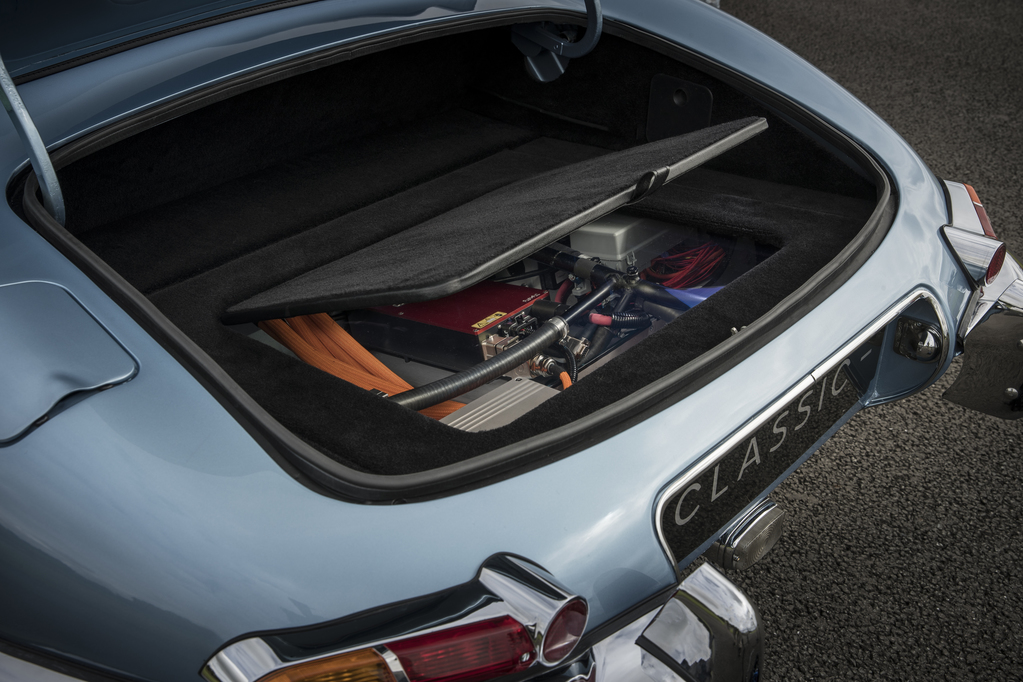
Using an electric powertrain with similar weight and dimensions to the outgoing petrol engine and transmission means the car’s structure, including suspension and brakes, has not changed, simplifying the conversion and homologation. It drives, handles, rides and brakes like an original E-type. Front-rear weight distribution is unchanged.
“We have integrated the new electric powertrain into the existing E-type structure, which means a conventional engine could be reinstalled at any point. We think this is essential as it ensures a period Jaguar remains authentic to its DNA.”
Tim Hannig
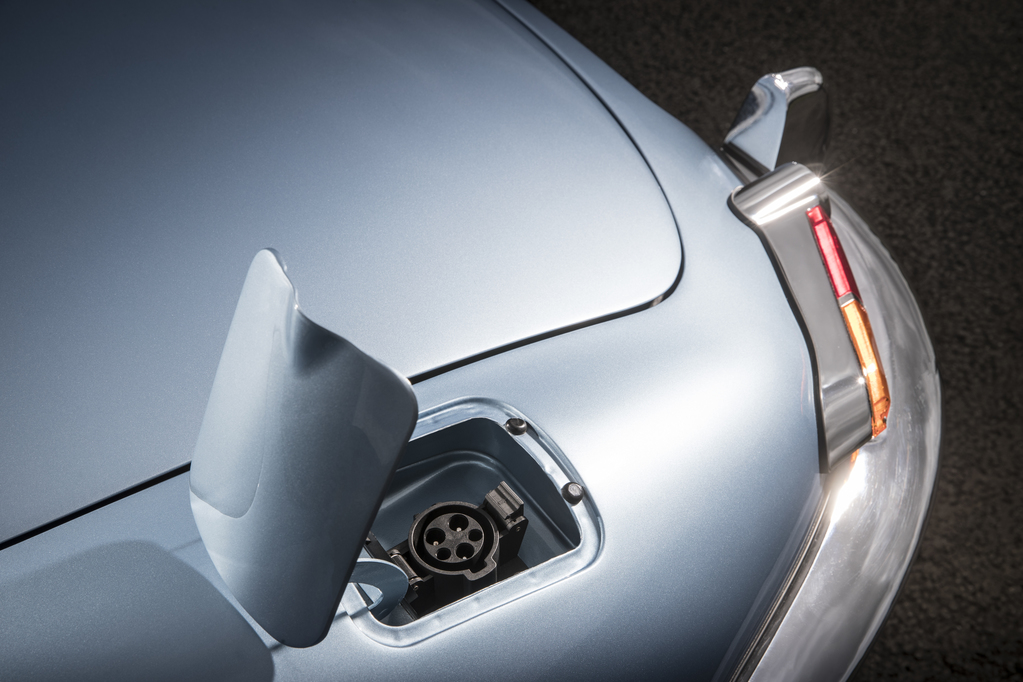
The XK six-cylinder engine was made from 1949 until 1992, and was fitted to nearly all iconic Jaguar models of that period, including the E-type, XK120, Mk2 and XJ6. The new electric powertrain could be used in any of these vehicles.
“We could use this technology to transform any classic XK-engine Jaguar.”
Tim Hannig
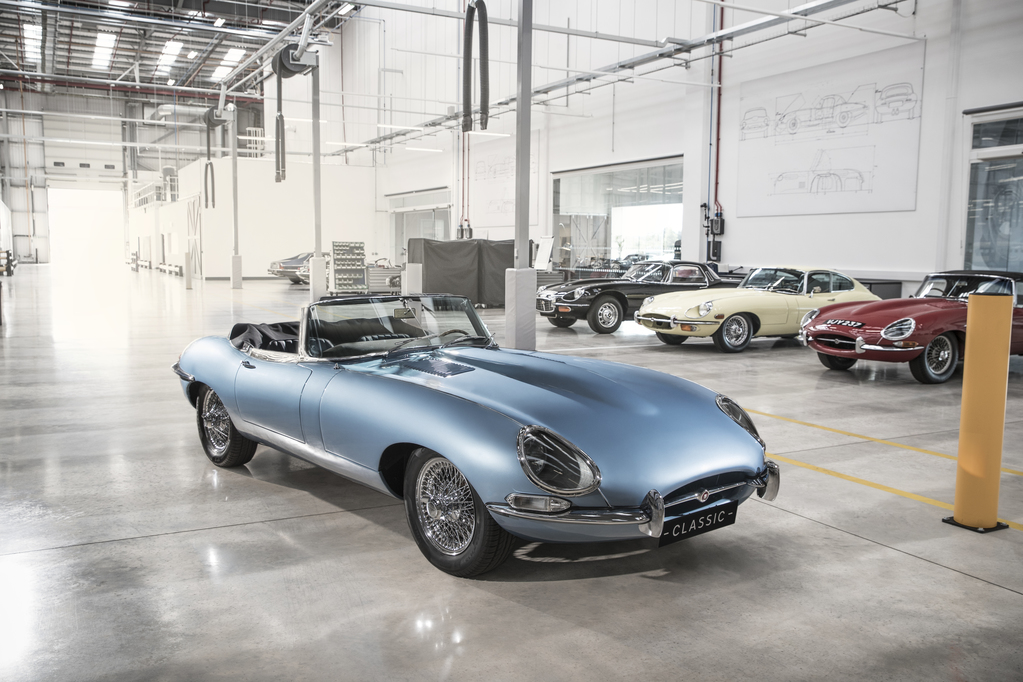
‘The most beautiful car ever made’
The E-type, launched in 1961, has regularly been voted the best-looking car of all time. Even Enzo Ferrari called it “the most beautiful car ever made”.
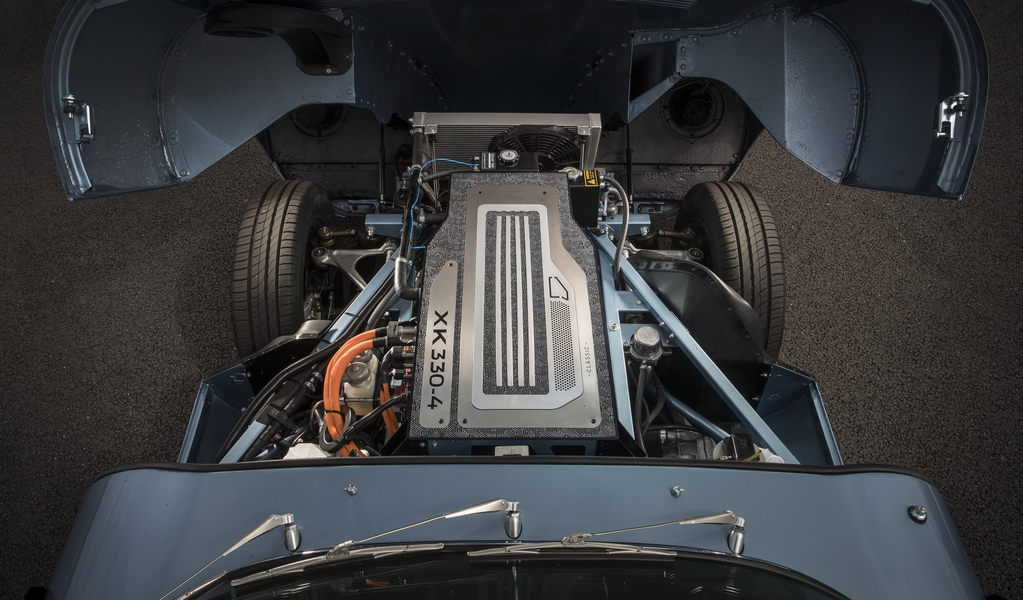
E-type Zero’s unique electric powertrain was developed by an electric powertrain specialist in conjunction with Jaguar Land Rover engineers and to a specific brief from Jaguar Land Rover Classic. It uses some technology and components borrowed from the upcoming I-PACE, Jaguar Land Rover’s first production all-electric vehicle.
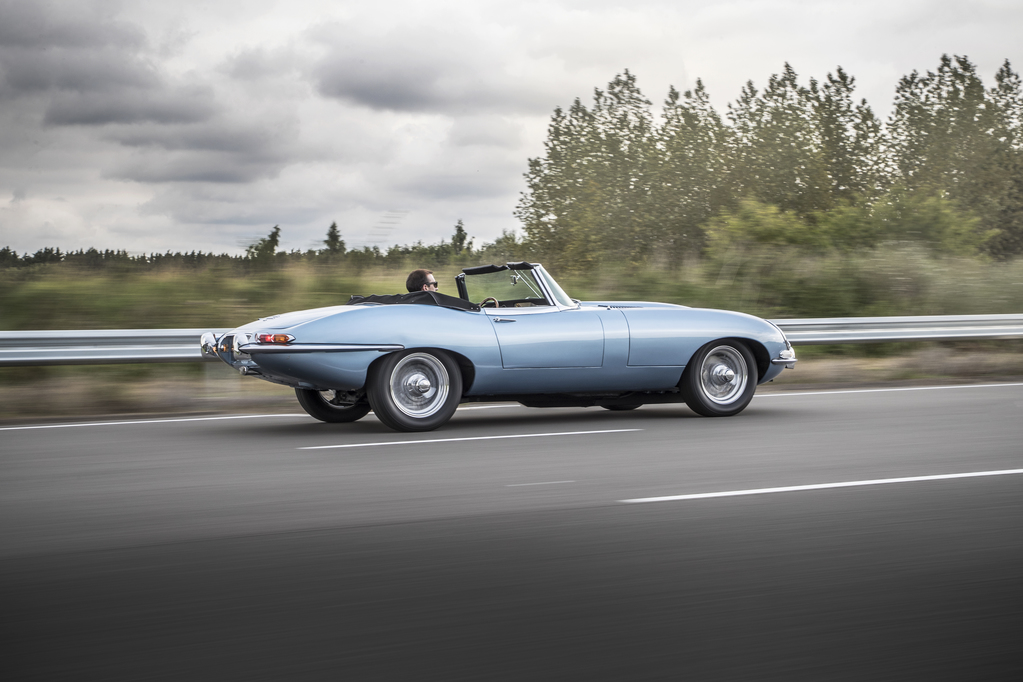
The E-type Zero has a ‘real world’ range of 270km (about 170 miles), helped by the low weight and good aerodynamics. It uses a 40kWh battery, which can be recharged from home overnight (typically in six to seven hours, depending on power source).
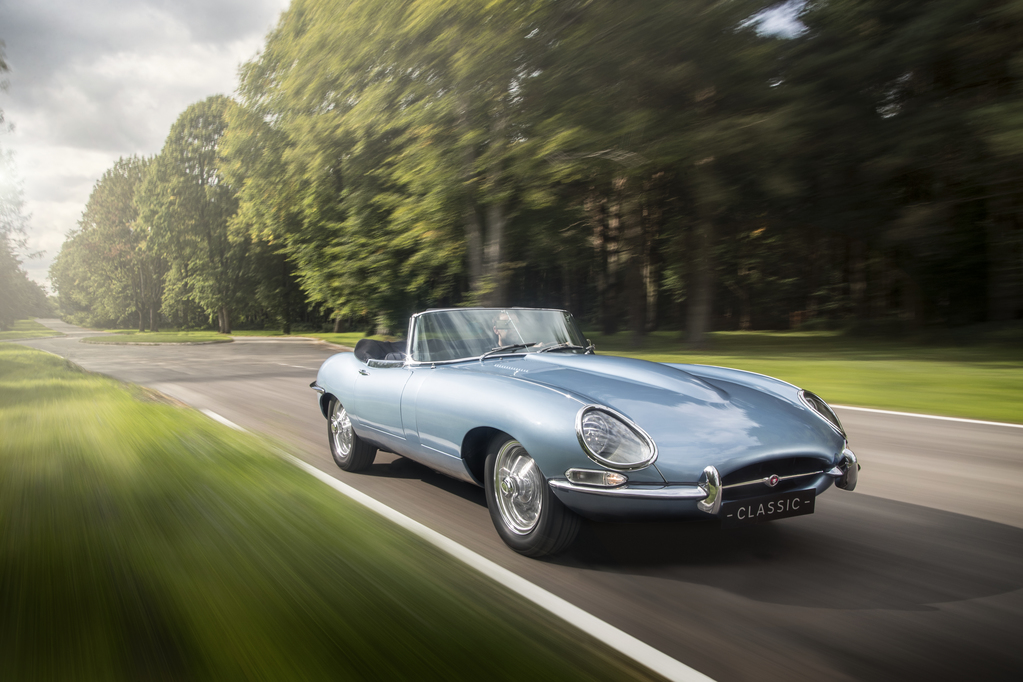
This is an extremely interesting development from Jaguar Classics, one that we at KWE like very much, having put thought into a similar project for the XJS… now that would be an exciting prospect, a fully electric Jaguar XJS. It would make these beautiful, comfortable classics timeless and clean.